
Flooring quotes in Western North Carolina and the Upstate can vary by thousands of dollars for what looks like the same project: luxury vinyl plank flooring in the living room, hardwood flooring in the dining room, maybe a waterproof laminate flooring or SPC flooring in the basement. The difference comes from dozens of small details you’re rarely told about up front: subfloor conditions, concrete dips, grinding and leveling, wear layers, veneer thickness, floor grades, and finish options like bleaching and refinishing.
This guide is written to help homeowners in Asheville, Spartanburg, and Greenville understand:
- The real cost drivers behind flooring estimates
- How luxury vinyl, vinyl plank flooring, SPC, WPC, waterproof laminate, splash-proof laminate, hardwood, and engineered wood differ in both price and performance
- How choices like veneer thickness, quality level (1–4), sanding, refinishing, and bleaching affect both upfront cost and long-term value
- How to think about all of this through the lens of your psychology as a buyer—your fears, your goals, and the subtle ways flooring decisions shape how you feel in your home
Along the way we’ll naturally weave in search-friendly phrases—things you might type like “flooring near me Asheville,” “vinyl flooring near me Greenville,” “hardwood flooring Spartanburg,” or “flooring installation cost”—while keeping the article professional and human, not robotic.
1. The Hidden First Line on Every Flooring Quote: Subfloor, Concrete Dips, Grinding & Leveling
Before we talk about luxury vinyl plank, SPC flooring, WPC flooring, hardwood, or laminate, we have to talk about the part you never see but always pay for: the subfloor.
In the Asheville flooring market, many homes have crawl spaces and older framing. In Spartanburg and Greenville, you’ll see a mix of slabs, basements, and pier-and-beam. All of these have one thing in common: Your new floor will only be as good as the surface it’s installed on.
Common Subfloor and Concrete Issues in Asheville, Spartanburg & Greenville
When a flooring installer walks your home, they’re quietly evaluating:
- Subfloor flatness – Are there dips, waves, or humps in the plywood or OSB?
- Concrete slabs – Are there cracks, low spots, or high ridges that will telegraph through LVP flooring, SPC vinyl plank flooring, or tile?
- Moisture – Particularly in basements or on-grade slabs in Greenville and Spartanburg, or damp crawl spaces around Asheville.
- Squeaks and movement – Loose or poorly fastened subfloor panels that need to be screwed down or repaired.
These details matter because:
- Luxury vinyl flooring and SPC rigid core flooring require a relatively flat substrate to avoid joint failure and visible hollow spots.
- Engineered hardwood flooring and solid hardwood flooring installed over uneven subfloors will creak, gap, and move.
- Tile flooring and natural stone are even less forgiving.
Grinding, Leveling, and Subfloor Prep: Why It Raises Your Flooring Cost
To correct issues, a professional flooring company in Asheville, Spartanburg, or Greenville might recommend:
- Grinding high spots on concrete slabs
- Self-leveling compound to fill concrete dips and bring floors into tolerance
- Patching or replacing subfloor panels that are damaged, rotted, or out of level
- Re-screwing or nailing subflooring to eliminate squeaks and flex
These items often appear on estimates as:
- “Grinding/leveling as needed”
- “Self-leveling compound”
- “Subfloor repair” or “subfloor prep”
In the Asheville–Greenville–Spartanburg region, this can realistically add:
- A modest per-square-foot charge for light leveling, or
- Hundreds to thousands of dollars in older or heavily uneven homes
Psychological angle: what should you think here? A lower quote that says nothing about subfloor preparation, concrete dips, or floor leveling might feel attractive at first. But flooring that clicks, pops, separates, or feels like a roller coaster costs you more in the long run—in repairs, frustration, and even resale value. An honest flooring contractor near you will call out these issues early and give you options. That transparency is usually a green flag, not a scare tactic.
2. Luxury Vinyl, SPC, and WPC: Why Similar Looking Floors Have Very Different Prices
Luxury vinyl flooring is one of the most searched-for products in this region—terms like “LVP flooring near me,” “SPC flooring Greenville,” “vinyl plank flooring Asheville,” “vinyl flooring near me Spartanburg,” and “best vinyl plank flooring” are trending for good reason. But not all vinyl is created equal.
2.1 LVP / LVT: Core, Thickness, and Wear Layer
When you see LVP (Luxury Vinyl Plank) or LVT (Luxury Vinyl Tile), you’re usually looking at:
- A vinyl core (flexible or semi-rigid)
- A decor film that shows the wood or stone pattern
- A wear layer (clear protective surface) in mils (e.g., 8 mil, 12 mil, 20 mil)
- Sometimes an attached pad for sound and comfort
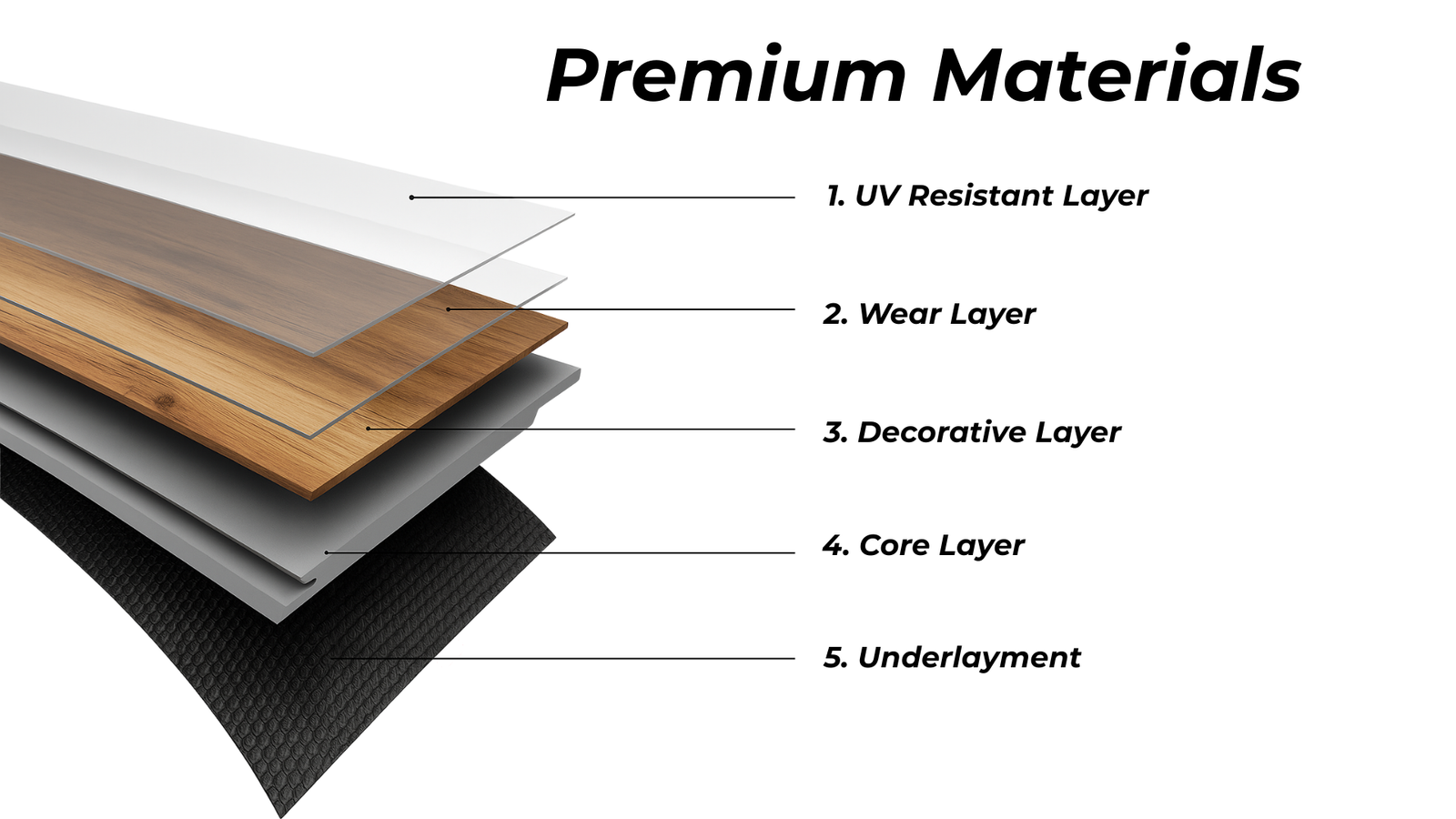
Key cost drivers for luxury vinyl plank flooring:
Total thickness (often 4 mm–8 mm)
Thicker vinyl plank products feel more solid underfoot, can bridge very minor subfloor variations, and generally belong in mid- to upper-tier price ranges.
Wear layer thickness
- Entry level: 6–8 mil wear layer – economical, best for lighter traffic spaces or budget projects
- Mid-range: 12–20 mil wear layer – ideal for most families with kids and pets
- Premium: 20–28+ mil wear layer – often used for high-traffic homes or light commercial spaces
The wear layer is one of the most important pieces of data on a vinyl flooring product; it directly affects how long the floor will look new before it shows scratching, dullness, and wear.
2.2 SPC Flooring (Stone Plastic Composite)
SPC flooring is a type of rigid core luxury vinyl with:
- A stone plastic composite core (limestone + polymers)
- Excellent dimensional stability
- Strong resistance to dents and impacts
- Great performance in sunrooms, kitchens, basements, and high-traffic areas common in Upstate homes
Homeowners searching “SPC vinyl flooring Greenville” or “rigid core vinyl plank flooring Asheville” are usually looking for:
- A floor that handles temperature swings, heavy furniture, and active households
- A waterproof flooring option that works on concrete slabs or over old tile
Cost differences vs standard LVP:
SPC is often mid-priced but can range from budget lines to premium collections. Higher-end SPC floors in Asheville or Greenville may include enhanced bevels, embossed-in-register textures, longer/wider planks, and thicker wear layers, all of which raise the per-square-foot price.
2.3 WPC Flooring (Wood Plastic Composite)
WPC flooring includes a wood fiber + plastic composite core. Compared to SPC:
- Feels warmer and more forgiving underfoot
- Often has better sound absorption
- Typically targeted at comfort-driven residential applications
From a pricing standpoint, WPC often sits in the mid-to-upper price bracket because:
- It’s marketed as a premium comfort upgrade
- Many WPC vinyl plank flooring products are paired with high-end visuals and thicker wear layers
If you’re browsing flooring stores near me or vinyl plank flooring near me in Asheville, Spartanburg, or Greenville, you’ll see SPC and WPC side by side. The right choice depends on how you balance budget, comfort, and durability.
3. Hybrid Laminate: Waterproof Laminate vs Splash-Proof Laminate
Searches like “waterproof laminate flooring Asheville,” “laminate vs vinyl flooring Greenville,” “cheap laminate flooring Spartanburg,” and “best laminate flooring for kitchens” reflect a growing confusion: laminate used to be known as “never put it near water.” That’s no longer the whole story.
3.1 Traditional / Splash-Proof Laminate
Older and budget laminate flooring is often splash-proof, not fully waterproof:
- It resists small spills if wiped up promptly.
- But standing water, pet accidents, or repeated moisture exposure (especially over crawl spaces in Asheville) can cause edge swelling and damage.
- Boards are typically made with HDF (high density fiberboard) that is vulnerable if water penetrates seams.

This type of laminate floor is usually budget-friendly, but the risk profile is higher in kitchens, bathrooms, mudrooms, or basements in Spartanburg and Greenville. If you see a very low laminate flooring cost in a quote, ask whether it’s traditional laminate or truly waterproof laminate flooring.
3.2 Waterproof Laminate / Hybrid Laminate
Waterproof laminate or hybrid laminate is designed to close the gap between traditional laminate and luxury vinyl:
- Improved core formulations and tight locking systems resist water penetration.
- Many products are rated for 24–72 hours of topical water without swelling.
- Some include plastic or specialized cores that behave more like vinyl while still giving that laminate “feel” and sound.
These waterproof laminate lines are more expensive than splash-proof laminate, but in many Western NC and Upstate SC homes, that added protection is worth it, especially where kids, pets, and heavy use are expected.
Psychology of choice: If you’re someone who hates the idea of “babying” your floors, and you know your family life isn’t gentle, paying extra for true waterproof or hybrid laminate can buy you peace of mind every time someone spills, tracks in slush, or comes in from the pool.
4. Hardwood Flooring: Understanding Quality Levels (1–4) and Cost
When you search for hardwood flooring Asheville, hardwood floors Greenville, or wood flooring Spartanburg, you’re entering a world where tiny details—most of them invisible in a quick showroom glance—dramatically change both price and long-term value. One of the biggest is grade/quality level, often thought of in tiers 1 through 4.
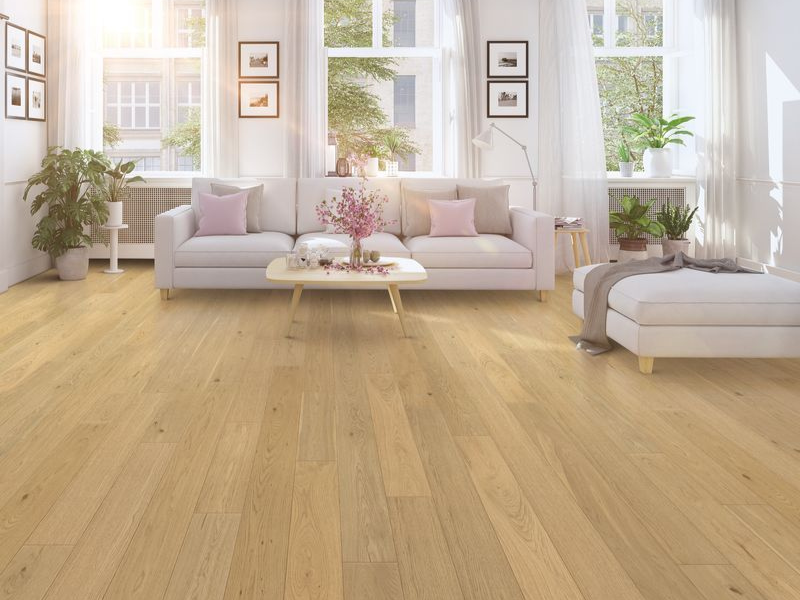
4.1 Hardwood Quality Levels 1–4 (Conceptually)
While every manufacturer and mill uses slightly different terminology, you can think of hardwood quality like this:
Level 1 – Clear / Select (Top Grade)
- Very uniform color and grain
- Minimal knots or character marks
- Long average board lengths
- Highest price per square foot
Level 2 – Select & Better / #1 Common (High Quality)
- Some natural color variation and small knots
- Still relatively consistent and refined appearance
- Slightly shorter lengths than top grade
- Great balance of beauty and cost
Level 3 – #2 Common / Character Grade
- More knots, mineral streaks, and color variation
- Strong sense of “natural” or “rustic” look
- Often shorter board lengths
- Lower price point; very popular in Asheville and mountain-style homes
Level 4 – Cabin / Utility / Rustic (Budget / High Character)
- Significant color variation
- More visible knots, checks, and potential milling imperfections
- Shorter, more random lengths
- Lowest price, but also the most “busy” visually
How this affects cost in Asheville, Spartanburg, and Greenville: A Level 1 select white oak hardwood floor might be dramatically more expensive than a Level 3 character hickory, even if both are “hardwood flooring.” Many homeowners actually prefer Level 2 or 3 because they balance budget and natural character, especially in craftsman and farmhouse styles common in the region.
4.2 Solid Hardwood vs Engineered Hardwood
You’ll also see both solid hardwood flooring and engineered hardwood flooring priced differently.
- Solid hardwood: One piece of wood all the way through; can be sanded and refinished multiple times.
- Engineered hardwood: A veneer (wear layer) of real wood on top of a plywood or other stable core.
Engineered products shine in homes with:
- Basements or on-grade slabs (common in Greenville/Spartanburg)
- Humidity fluctuations (common in the mountains around Asheville)
- Radiant heat or environments where solid wood could cup or move too much
If you’re comparing quotes that say “hardwood” in flooring stores near me, make sure you know whether you’re seeing solid wood flooring or engineered hardwood, and what grade level (1–4) it is.
5. Engineered Hardwood and Veneer Layers: Levels 1–4 and Cost Differences
Within engineered wood flooring, one of the most important cost drivers is the veneer (wear layer) thickness—again, often thought of conceptually in levels 1 through 4.
5.1 Veneer / Wear Layer Levels 1–4
Level 1 – Thin Veneer (Entry Level)
- Very thin top layer of real wood
- Generally not designed for multiple sandings
- Lowest cost engineered option
- Good for budget projects or spaces with expected shorter use cycles
Level 2 – Moderate Veneer (Mid-Level)
- Slightly thicker wear layer, sometimes refinishable once under ideal conditions
- Balanced cost and performance
- Good for many Asheville, Spartanburg, and Greenville homeowners who want real wood but don’t expect numerous refinishes
Level 3 – Thick Veneer (Upper Mid-Level)
- Substantially thicker top layer that can usually be sanded and refinished one or more times
- Higher stability than solid wood but closer to solid in longevity
- Price jump is noticeable but often justified if you’re thinking long term or resale
Level 4 – Very Thick Veneer (Premium)
- Nearly solid-like wear layer; can be refinished multiple times
- Excellent dimensional stability due to engineered core + refinishable surface
- Highest price per square foot in the engineered category
5.2 Why Veneer Level Changes Your Total Project Cost
The veneer level affects:
- Material price per square foot (the thicker the veneer, the higher the manufacturing cost)
- Long-term maintenance options (can you refinish three times or not at all?)
- Resale perception – Buyers and home inspectors in the Asheville and Upstate markets often look favorably on thicker-veneer engineered floors.
Psychological perspective: If you view your home as a long-term asset, investing in a Level 3 or 4 engineered veneer can feel like buying an insurance policy. You pay more upfront, but you know that in 10 or 15 years, you can refresh the floor instead of starting over.
6. Sanding, Refinishing, and Bleaching: Cost, Complexity, and Value
Beyond the initial install, many homeowners in Asheville, Spartanburg, and Greenville ask:
- “Can I refinish my floors instead of replacing them?”
- “What does it cost to sand and refinish hardwood flooring?”
- “If we bleach the floor for that light, modern look, how does that affect value and maintenance?”
These are especially important if you’re pricing hardwood floor refinishing near me or comparing refinishing vs new flooring installation.
6.1 Sanding and Refinishing Hardwood or Thick-Veneer Engineered
Sanding and refinishing involves:
- Sanding the existing hardwood or engineered veneer down to fresh wood
- Repairing minor damage, filling gaps, and smoothing transitions
- Applying stain (if desired) and multiple coats of finish
Cost varies based on:
- Condition of the floor (deep scratches, pet stains, cupping)
- Species and hardness (oak vs hickory vs pine)
- Total square footage
- Access and layout (lots of small rooms vs wide-open spaces)
While pricing ranges vary, refinishing is usually less expensive than full replacement with quality hardwood, and dramatically cheaper than replacing a premium engineered floor—if the wear layer is thick enough.
6.2 Bleaching Floors: Aesthetics vs Cost
Bleached floors (also called whitewashed, Nordic, or pickled finishes) are very popular in design-forward Asheville neighborhoods and higher-end Greenville developments.
However, bleaching:
- Adds additional steps and materials to the refinishing process
- Requires a skilled finisher who understands your specific wood species
- Can affect how the wood ages and accepts future stains or finishes
- Often carries an upcharge because of the skill and time involved
From a value standpoint:
- When done well, bleached or lightened floors can raise perceived value and appeal, especially in contemporary or Scandinavian-inspired homes.
- Overly aggressive or poorly executed bleaching can reduce the remaining life of the floor and limit future refinishing options.
Again, your psychology as a buyer matters: Are you designing a showpiece home that reflects your personal taste, or are you thinking primarily about broad market appeal and resale? In Asheville, Spartanburg, and Greenville, neutral, well-executed light finishes usually help resale, while extremely trendy or high-maintenance looks can be more polarizing.
7. How All These Variables Come Together in Real-World Floor Costs
When you contact a flooring company in Asheville, flooring installer in Spartanburg, or flooring contractor in Greenville, your final flooring installation cost will be the sum of many small decisions:
Subfloor and concrete prep
- Are there dips that require grinding and leveling?
- Will self-leveling compound or subfloor repair be needed?
Material category
- Luxury vinyl (LVP/LVT) vs SPC vs WPC
- Hybrid laminate (waterproof vs splash-proof)
- Solid hardwood vs engineered hardwood flooring
- Possibly tile flooring or bathroom flooring / kitchen flooring for wet spaces
Product quality details
- Total thickness and wear layer for vinyl
- Core construction and moisture rating for laminate
- Hardwood flooring quality level (1–4)
- Engineered veneer level (1–4) and species
Installation complexity
- Stairs, transitions, patterns (herringbone, chevron), or borders
- Moving furniture, removing and disposing of old flooring
- Working in tight older homes vs new, open floor plans
Finishing choices
- Natural vs stained
- Sheen level (matte, satin, semi-gloss)
- Bleached or specialty finishes
- Future sanding and refinishing potential
A Healthy Way to Think About Quotes
Instead of asking, “Why is Contractor A so much more than Contractor B?”, ask:
- What subfloor and concrete work is each including?
- What thickness and wear layer is the LVP / SPC / WPC?
- What hardwood grade or engineered veneer level are they quoting?
- Are they accounting for future refinishing or just the cheapest initial install?
- Are they using true waterproof flooring where you need it, or just splash-proof?
This mindset puts you—not the quote—back in control. It mirrors the strategic thinking behind powerful negotiation and decision-making frameworks: you want to understand the levers, not just the outcome.
8. Using Psychology to Make a Smart Flooring Decision (Without Feeling Manipulated)
Home improvement marketing often leans on fear (“If you don’t choose this, your floors will fail”), scarcity (“Sale ends today”), or status (“Only premium homes use this product”). Recognizing those psychological levers protects you from being pushed into a flooring choice that’s wrong for your life.
Here’s a healthier framework for homeowners in Asheville, Spartanburg, and Greenville:
- Clarify your real priorities.
- Durability with kids and pets?
- High-end aesthetics and resale?
- Budget-conscious but not disposable?
Match product type to lifestyle and location.
- Basements / slabs / moisture-prone areas → SPC flooring, WPC flooring, or true waterproof vinyl plank flooring.
- Main living areas → Luxury vinyl plank (LVP), quality engineered hardwood, or hybrid laminate, depending on budget and taste.
- High-end showpiece spaces → Higher-grade hardwood flooring or thick-veneer engineered wood.
Use “quality levels” to decide where to invest.
- Maybe you choose mid-range LVP flooring in secondary bedrooms, but Level 3 engineered hardwood in the main living area.
- Or you might invest in top-tier wear layers in your kitchen but select a more economical option in a guest bedroom.
Think in total cost of ownership, not just initial price.
- A cheap product installed over poorly prepared subfloors can cost more in five years than a better system done right today.
- Floors you can sand, refinish, or even bleach in the future extend the life—and appeal—of your home.
9. Quick FAQs: Flooring Costs in Asheville, Spartanburg, and Greenville
To pull everything together, here are a few common cost-focused questions homeowners search, often using phrases like “flooring near me,” “vinyl flooring near me,” or “hardwood floor refinishing near me.”
Q1: What does luxury vinyl plank flooring typically cost in Asheville, Spartanburg, and Greenville?
Costs for luxury vinyl plank flooring (LVP) and SPC flooring vary widely based on:
- Thickness (overall and wear layer)
- Whether it’s SPC or WPC
- Brand and visual (basic vs premium)
- Subfloor prep required
Entry-level vinyl plank may be quite affordable, while high-end SPC/WPC with 20–28 mil wear layers and attached pads will sit in a higher price tier. Flooring installation cost adds on top of that, especially if grinding and leveling are needed.
Q2: Is hardwood flooring much more expensive than vinyl or laminate?
Hardwood flooring usually costs more than vinyl plank flooring or waterproof laminate, but:
- Lower-grade hardwood (quality level 3–4) can sometimes overlap with high-end luxury vinyl in price.
- Engineered hardwood flooring with thinner veneers (level 1–2) can be more affordable than you expect.
- Hardwood offers refinishing and bleaching options that extend its life and impact resale.
Q3: What should I budget for sanding and refinishing hardwood floors?
Exact numbers depend on your floor’s condition, but sanding and refinishing is commonly cheaper than full replacement. In Asheville, Spartanburg, and Greenville, it’s often a strong value play if your existing hardwood or thick-veneer engineered flooring is structurally sound.
Q4: Is waterproof flooring really necessary?
If you’re in:
- Basements, slab homes, or moisture-prone areas → Yes, waterproof flooring like SPC or WPC LVP, or waterproof laminate, is often well worth it.
- Upper levels with stable humidity → You might choose hardwood or engineered wood and simply manage spills promptly.
Final Thought
Your floors are not just a surface you walk on. They influence how your entire home feels—how light bounces, how sound travels, how warm or refined each room seems. In markets like Asheville, Spartanburg, and Greenville, where style, comfort, and resale value all matter, understanding the true cost structure behind flooring—subfloors, grinding and leveling, luxury vinyl vs SPC vs WPC, waterproof laminate vs splash-proof laminate, hardwood flooring grades 1–4, engineered veneer levels 1–4, and finishing options like sanding, refinishing, and bleaching—gives you the same kind of strategic advantage great decision-makers rely on.
